
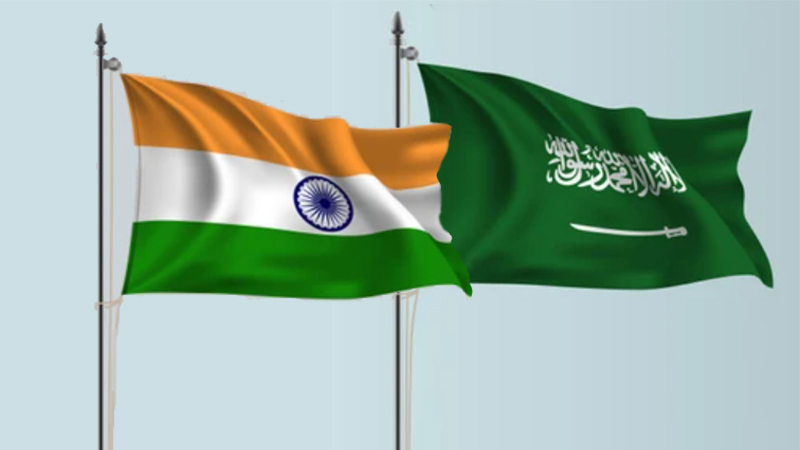
At the invitation of Crown Prince and Prime Minister of Saudi Arabia, Mohammed bin Salman bin Abdulaziz Al Saud, Indian Prime Minister Narendra Modi paid a state visit to the Kingdom of Saudi Arabia on April 22, 2025. This was Modi’s third visit to the kingdom, reinforcing a growing diplomatic relationship that has matured into a strategic partnership. The visit took place under the shadow of a gruesome terrorist attack in Pahalgam, Jammu and Kashmir, which left dozens of civilians dead, adding urgency and gravity to the regional security discussions during the high-level bilateral engagement.
The two leaders met at Al-Salam Palace in Jeddah and presided over a round of formal discussions reflecting on their nations’ close historical ties. They co-chaired the second meeting of the India-Saudi Arabia Strategic Partnership Council, reviewing progress made since the inaugural session in 2023. Acknowledging the strong foundations of their relationship, the two sides charted future cooperation across a wide spectrum of domains including defense, energy, technology, education, investment, and people-to-people exchanges.
In a display of solidarity and shared concern, both leaders unequivocally condemned the Pahalgam attack. They rejected any justification for terrorism, reaffirming their commitment to confront terrorism in all forms, including cross-border activities. Both sides stressed the need for dismantling terrorism infrastructure and demanded that perpetrators be brought to swift justice. The statement also included strong remarks on the prevention of weapons proliferation to terrorist groups, including drones and missile technologies.
The economic pillar of the partnership was robustly reinforced with detailed deliberations on investment. The two leaders reviewed the outcomes of the High-Level Task Force formed in 2024, which reached understandings to facilitate Saudi investments in India’s energy, petrochemicals, fintech, digital infrastructure, pharmaceuticals, and manufacturing sectors. Discussions also included plans to establish two new refineries. India acknowledged the establishment of an India Desk at the Public Investment Fund of Saudi Arabia, aimed at easing investment flow and coordination.
Trade between the two countries has surged, with India becoming Saudi Arabia’s second-largest trading partner and Saudi Arabia emerging as India’s fifth-largest partner. Both sides endorsed further trade diversification and intensified exchanges between business delegations. They also reiterated their commitment to advance negotiations on the India-Gulf Cooperation Council Free Trade Agreement.
Energy cooperation emerged as a cornerstone of the dialogue. India and Saudi Arabia discussed collaborative mechanisms to stabilize global oil markets and broaden energy cooperation to include crude supply, LPG, petrochemical projects, and strategic reserves. They also agreed on joint studies for electrical interconnection and enhancing expertise in renewable energy, grid resilience, and storage technologies. A landmark decision was made to increase cooperation on green and clean hydrogen, with a focus on demand stimulation, technology exchange, and infrastructure development.
On climate issues, both sides committed to work under the principles of the UN Framework Convention on Climate Change and the Paris Agreement. India endorsed Saudi Arabia’s initiatives like the Saudi Green Initiative and Middle East Green Initiative, while the kingdom recognized India’s contributions such as the International Solar Alliance and the One Sun-One World-One Grid framework. Both agreed on the potential of circular carbon economy approaches to manage emissions and achieve sustainability goals.
The defense relationship saw new momentum with the creation of a Ministerial Committee on Defence Cooperation. Both countries expressed satisfaction over the growing military engagement, including joint exercises like SADA TANSEEQ and AL MOHED AL HINDI. They also noted ongoing staff-level talks among all three branches of their militaries and decided to enhance collaboration in the defense industry. In parallel, enhanced coordination in cybersecurity, border security, counter-narcotics, and anti-trafficking operations was discussed as essential to maintaining regional security.
Health sector collaboration expanded with the signing of a new memorandum of understanding. India welcomed the Saudi initiative on antimicrobial resistance and acknowledged Saudi efforts to streamline the registration of Indian pharmaceuticals. Both sides committed to continued regulatory cooperation, including the five-year extension of their medical product regulation MoU.
In the domain of technology, bilateral agreements were reached to explore collaboration in artificial intelligence, semiconductors, and digital governance. A significant agreement was signed between the regulatory bodies of the two countries’ telecom sectors. In space, an MoU promises cooperation in launch vehicles, spacecraft systems, space applications, research, and entrepreneurship, potentially opening a new chapter in space science and technology sharing.
Cultural and tourism cooperation also featured prominently. A new Ministerial Committee on Tourism and Cultural Cooperation was announced to deepen exchanges in heritage, film, arts, and literature. Commitments were made to promote sustainable tourism and increase people-to-people engagement in media and sports.
Agricultural and food security cooperation was reaffirmed, particularly in fertilizer trade and strategic agreements to secure long-term supply and joint investments. This reflected both countries’ intentions to enhance food resilience and bilateral dependency in critical resources.
Education and scientific exchange, underscored as strategic domains, gained traction with the Saudi side opening avenues for leading Indian universities to establish campuses in the kingdom. Labour cooperation was also reviewed, with both sides aiming to identify mutual opportunities for human resource collaboration.
Connectivity was another key theme. The leaders recalled their earlier signing of the MoU on the India-Middle East-Europe Economic Corridor and reiterated their shared commitment to develop physical infrastructure, port linkages, and electrical grid networks. Progress on clean hydrogen and logistics supply chains was acknowledged, and both sides noted the increase in maritime shipping routes between them.
The visit also reinforced the importance of coordination in multilateral forums such as the G20, IMF, and World Bank. Both sides agreed on deeper collaboration to tackle global economic challenges and manage sovereign debt under the G20-endorsed Common Framework. They voiced support for political resolutions to conflicts such as the war in Yemen and praised each other’s humanitarian efforts in the region. Freedom of navigation and maritime safety, particularly in strategic waterways, were affirmed in line with the UN Convention on the Law of the Sea.
A total of four MoUs were signed during this visit, encompassing space cooperation, health collaboration, postal services, and anti-doping measures. These agreements symbolized the widening scope of India-Saudi Arabia cooperation beyond traditional areas.
The state visit concluded with mutual expressions of goodwill and a reaffirmation of the growing strategic trust between the two nations. Both sides agreed to continue building on this partnership through institutional dialogue and mutual engagement, laying the foundation for a comprehensive and enduring alliance across geopolitical, economic, and social dimensions.