

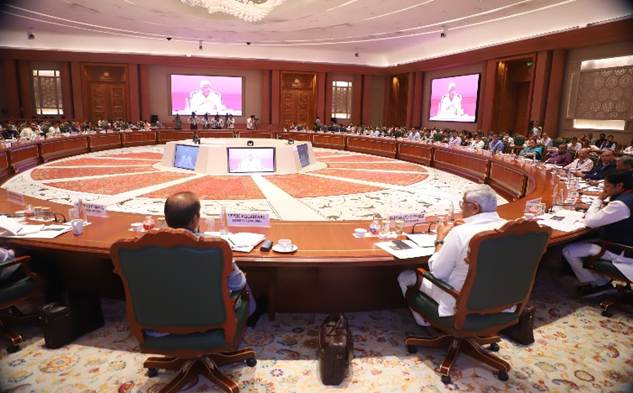
The 38th meeting of the Central Advisory Board of Archaeology concluded successfully at Bharat Mandapam in New Delhi, marking a significant step in the collective effort to protect and promote India’s rich archaeological heritage. Union Minister of Culture and Tourism Gajendra Singh Shekhawat, in his keynote address, outlined an inclusive and forward-looking roadmap for excavation, exploration, and conservation efforts. He underscored the vital role of the Archaeological Survey of India in safeguarding the nation’s cultural legacy, calling for extensive and far-reaching excavation projects.
One of the major highlights of the meeting was the revamping of the Underwater Archaeology Wing, which is currently conducting explorations in the waters of Dwarka. Shekhawat reiterated Prime Minister Narendra Modi’s vision of combining development with heritage, emphasizing the need to enhance the experience of visitors and tourists at archaeological sites. He also pointed to the successful repatriation of antiquities to India, describing it as a major achievement in restoring the nation’s cultural identity. The Minister further highlighted ASI’s active role not only within India but also in conserving and preserving historical sites overseas, demonstrating India’s commitment to global cultural heritage. He called for regular annual meetings of the Central Advisory Board to maintain consistent dialogue and collaborative planning among stakeholders in archaeology and heritage conservation.
The meeting commenced with tributes to the departed members of the Board and victims of the recent Pahalgam terror attack. Organized under the leadership of Gajendra Singh Shekhawat and convened by the Director-General of the Archaeological Survey of India, the session saw the participation of Member of Parliament Sumer Singh Solanki, Secretary of the Ministry of Culture Vivek Aggarwal, and senior officials, dignitaries, and experts from across the country.
Vivek Aggarwal highlighted the rich legacy of the Archaeological Survey of India in preserving the country’s diverse monuments and heritage. He stressed the need for innovation and modernization in heritage management, focusing on integrating technology into conservation processes, including epigraphy. He proposed deploying Artificial Intelligence-based tour guides at heritage sites to enhance visitor experiences. He also emphasized the economic potential of heritage conservation, suggesting that traditional artists and sculptors associated with restoration work be supported as creative startups. This initiative, he noted, would preserve traditional skills while providing employment opportunities. He praised the Adopt A Heritage program, under which ASI has partnered with private sector organizations for the management of 37 heritage sites, and proposed identifying additional sites with UNESCO potential to boost tourism and revenue generation.
The meeting witnessed active participation from representatives of state archaeology and cultural departments, who engaged in discussions on initiatives, discoveries, and proposals for the protection and restoration of historically significant sites. The Board reviewed ongoing ASI projects and explored ideas for future archaeological efforts.
The Central Advisory Board of Archaeology was conceptualized and established by the Government of India in 1945 to promote collaboration between the Archaeological Survey of India and Indian universities conducting archaeological research. It also facilitates partnerships with institutions that focus on the application of archaeological principles and training of future archaeologists. Every three years, the Board is reconstituted through a formal notification after the approval of the Minister of Culture, who serves as its Chairman.
The meeting reinforced India’s commitment to preserving its historical heritage while integrating technological advancements to ensure sustainable conservation practices. The discussions reflected a shared vision for a future where India’s archaeological treasures continue to be safeguarded and celebrated on both national and global platforms.